
What Is Feng Shui?
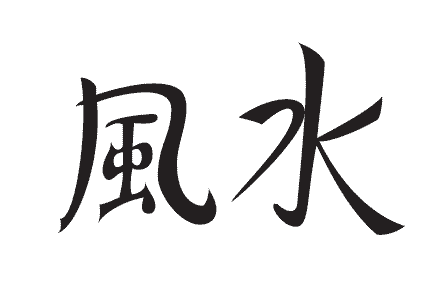
There is a great deal of talk about Feng Shui. There is a lot of information on the Internet, many books have appeared in recent years, and there are plenty of shops selling Feng Shui products. All well and good, but what exactly is Feng Shui?
If we translate from Chinese, Feng means wind and Shui means water, so the translation is “wind and water”. Why this pairing? Because these two forces, water and wind, are the ones that create and destroy Qi energy, respectively.
Water: Qi is created by water through the process of evaporation. The scientific explanation is that water, as a substance, changes from liquid to vapor through a molecular-level process that generates and releases energy.
Wind: The way Qi is destroyed by wind is easier to understand; wind disperses Qi energy and moves it from one place to another. If an area has strong air currents, it will generate bad Feng Shui, because the currents prevent Qi from settling. As a result, that area will not benefit from the Qi that is present.
Authentic Feng Shui practice is said to have emerged some 6,000 years ago, in Neolithic China. In essence, classical Feng Shui is a system based on the careful study of heavenly forces (time), earthly forces (interior and exterior space), and the way the Qi of these two planes interacts. It is the art and science of harmonizing the forces of nature in the place where you live and/or work and in the surrounding environment, so that balance brings better health, prosperity and more harmonious relationships, and gives you the impulse and motivation to succeed.
The Chinese have always believed in the unity of the world. They considered that daily life is more harmonious when it reflects the balance of the forces of nature. They observed the cyclical movement of nature and tried to understand in what form these changes affect us. From these ancient observations of nature, three fundamental principles were developed that underlie all of Chinese metaphysics: Yin and Yang, the theory of the five elements (phases) and the eight trigrams.
Surely, the first time you entered an unfamiliar house, you felt either that something was not right, that you were under attack or that your energy was starting to drop, or, on the contrary, that everything was calm, that you were at peace and felt extraordinarily good. What seems to have no explanation at first sight can be understood and, when unsuitable conditions appear, corrected through Feng Shui. Feng Shui (pronounced “fung shway”) is the Chinese art of creating a harmonious environment that brings happiness, prosperity and health. It creates a balance between the forces of the earth and those of the heavens. Without meaning to, we often block or agitate these forces, and the result is an environment that drains our energy and makes us feel permanently tired.
By placing objects in certain spots inside the home (cabinets, tables, decorations, plants), we can also block the smooth flow of Qi. At other times, staircases, their shape and position, and the position and shape of doors can create blockages. This is why it is very important to remove these blockages, and identifying them is part of the analysis we carry out.
More than anything else, Feng Shui embodies Chinese spirituality. In China, belief in the influence of Feng Shui is so strong that everyone tries to meet its requirements. A well-known example is the Repulse Bay apartment building in Hong Kong. After construction, it was reportedly found that the building had a huge void in its interior. Because the Feng Shui master who analyzed the building concluded that “the mountain star falls into the water”, thirty apartments whose residents would have been seriously affected were demolished and the architecture was reworked. Although a law was passed in China in 1979 banning practices based on superstition, a very large number of geomancers (Feng Shui practitioners) are still active today.
In Feng Shui, the emphasis is on wholeness – a generous wholeness based on harmonious communication between parts, which differs from a series of isolated, distinct parts joined into a whole with vague outlines. Feng Shui offers us new frames of reference toward collective consciousness. Establishing harmony in the world begins with you. Before we can change our global frame of reference, each of us must establish unity and harmony in our own home. We trust that you will set aside rational thinking and opt for a holistic perspective.
Looking for a personalized analysis of your space or destiny?
Contact us for Feng Shui, BaZi or QiMen consulting. We offer clarity, authentic traditional solutions and precisely calculated remedies.
Recommended articles
The Five Elements Theory
Although the term Five Elements is commonly used, the correct term is Five Phases, referring to wood, fire, earth, metal and water. They are called Phases because they involve a continuous transformation and interaction among them.
The Eight Trigrams
It is said that the legendary king and sage Fu Xi, around 4500 BC, divided the forces of nature into two categories: those in strong, aggressive motion (active) and those that do not move, that are quiet and passive (inactive)...
Xuan Kong Feng Shui
Xuan Kong means the Flying Stars School and is the oldest and most authentic school of Feng Shui. It has two components: Xuan Kong Fei Xing (the Flying Stars system) and Xuan Kong Da Gua (the method of the 64 hexagrams)...