Qi Energy
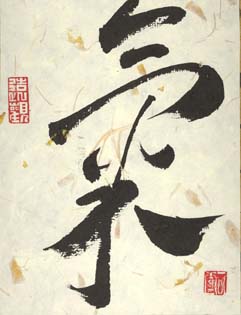
Qi is a concept that is hard to define. It denotes the energy or life principle that animates the world and penetrates all its visible and invisible manifestations and components, which it regulates and whose activity it coordinates. Qi is the quintessence underlying all things. It is the “substance” or force that encompasses everything, that allows the whole of Creation to manifest, and that unifies the essences of the energies of heaven, earth and humankind.
Qi has many meanings: it is the air we breathe, the Earth’s magnetic field, cosmic radiation and the light of the Sun. It is our spirit, and it can also represent luck. This force governs our health, well-being and happiness.
The purpose of Feng Shui is to amplify the positive aspects of Qi and minimize the negative ones, and to identify, control and direct Qi for the benefit of human beings.
In The Tao of Physics, Fritjof Capra draws a parallel between Qi and the quantum field. Both are described as an imperceptible form of matter that is present throughout space, that can condense into solid objects, and that carries the interactions between those objects in the form of waves.
Qi is structured on several levels. Two of these are physical Qi, which is coarser, and metaphysical Qi, which is more subtle in essence. Qi is in constant motion and in a permanent process of transformation. It moves fast or slowly, goes deep or comes to the surface, rises or descends. It drives the wind (Feng) and is contained by water (Shui), whose flow it controls. We cannot avoid the influence of Qi. We must know how to use it and direct it where we need it.
The concept of Qi is not foreign to other cultures; they simply use other terminology: Ki for the Japanese, Prana for the Hindus, Pneuma for the Greeks, Ankh for the Egyptians, Ruah for the Hebrews and, last but not least, the manifestation of the Holy Spirit for Christians.
In a house or a room, Qi must flow freely, without being blocked or obstructed, and this is what Feng Shui takes care of.
Looking for a personalized analysis of your space or destiny?
Contact us for Feng Shui, BaZi or QiMen consulting. We offer clarity, authentic traditional solutions and precisely calculated remedies.
Recommended articles
The Five Elements Theory
Although the term Five Elements is commonly used, the correct term is Five Phases, referring to wood, fire, earth, metal and water. They are called Phases because they involve a continuous transformation and interaction among them.
The Eight Trigrams
It is said that the legendary king and sage Fu Xi, around 4500 BC, divided the forces of nature into two categories: those in strong, aggressive motion (active) and those that do not move, that are quiet and passive (inactive)...
Xuan Kong Feng Shui
Xuan Kong means the Flying Stars School and is the oldest and most authentic school of Feng Shui. It has two components: Xuan Kong Fei Xing (the Flying Stars system) and Xuan Kong Da Gua (the method of the 64 hexagrams)...