
Types of Qi
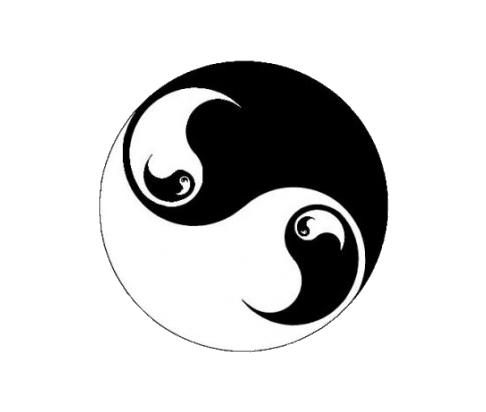
There are three types of Qi, three primary forces that sustain all of Creation: the Qi of Heaven, of Earth and of Humankind. All three must be in balance, separately and together.
The Chinese discovered how to use Qi and how to bring out its beneficial qualities in order to create harmony and balance in the body, the mind and the surrounding environment. There are preventive methods, such as the art of Feng Shui, Tai Chi and Qi Gong, as well as curative ones, such as Traditional Chinese Medicine and acupuncture. When there is balance and harmony in our surroundings, our being will be in balance too. Of course, this also requires a sound spiritual life and balancing the coarse Qi through proper nutrition, physical exercise and rest.
Heavenly Qi
The energy we receive from above is called Heavenly Qi, and it is the most important force of nature. It descends as a spiral from all celestial bodies. We are influenced most by the Qi of the Sun, then by that of the Moon, of the planets of the solar system and, finally, of the stars. The Qi of the Sun is the most important, because without it every trace of life on Earth would cease; if it is too strong, it brings burns, headaches, skin cancer and even death. The Moon also influences us strongly, but its influence is much more subtle, affecting our mental state, emotions and inner experiences. At every moment of its 28-day cycle it brings a different kind of energy. For example, it has been observed that seeds planted two to seven days after the new moon yield a much richer harvest. The new moon also influences the migration of birds and the breeding cycles of animals.
One component of Heavenly Qi is the Qi of the Weather. Very low and very high temperatures strongly affect us. For some people, a prolonged lack of light and very long rainy periods cause severe depression and suicidal tendencies.
Heavenly Qi is associated with time, which is directly associated with change and transformation. The transition from day to night, as well as the succession of the seasons, is the result of celestial activity. For this reason, in Feng Shui the moment when a building was constructed is essential, and it largely determines the personality of the building.
Earthly Qi
Mountains, watercourses, plains, hills, forests and the different types of crops carry within them a different kind of Earthly Qi that nourishes and influences us. It is a much coarser energy than Heavenly Qi. A mountain protects us and gives us psychological support; we feel much more stable when there is a mountain behind us. In Feng Shui, the mountain is Yin in nature, and therefore feminine, because the mountain looks after us just as a mother protects her children from anything that might harm them.
Feng Shui studies and uses the Qi generated by natural mountains as well as by artificial ones (tall buildings) surrounding the building. Interior mountains, created by very massive furniture and interior walls, are also very important, because they bring health and good relationships with other people if they are in harmony with the other Feng Shui elements. Similarly, watercourses correspond to Yang, masculine energy.
In general, the man is responsible for bringing prosperity to his family. The Qi of well-being is found in lakes, seas and oceans and is carried by rivers and, outdoors, by streets, and indoors by corridors and hallways. It flows through doors and windows. All of these are taken into account when analyzing the living and working space of a person or a family.
The Earth’s magnetic field is a component of Earthly Qi. Combined with the moment a house is built, its magnetic orientation characterizes the subtle essence of the dwelling. We must understand that the electromagnetic field influences the quality of the Qi that enters and “lives” in the house. Similarly, it is known that power lines and electrical appliances in the home affect our health in one way or another.
Human Qi
Each of us has our own Qi, which we receive at birth with the moment of our first breath. Like a fingerprint, this Qi is unique.
In Feng Shui, the year of birth is a very important piece of information. The energy we are born into gives us a vibration that may or may not be compatible with that of other people and with that of the home.
Human Qi is partly electrical in nature, but some of its aspects cannot be measured or understood with the five senses, as they are much more subtle. It has two components, one physical (coarse) and one metaphysical (subtle), the latter including destiny, luck and intuition.
Sheng Qi is vital energy, positive Qi. It carries beneficial currents that nourish our being. When we notice that a place is full of life and balanced, that we feel joy and have plenty of energy, that place is full of Sheng Qi. Sheng Qi can be classified according to the five senses.
- Sheng of sight - tidy gardens, pleasant building exteriors, clean, orderly and well-structured interiors, and happy, open people. In general, Sheng of sight is everything that pleases the eye.
- Sheng of hearing - fountains, chirping birds, wind chimes, the babbling of babies, certain kinds of music. We should remember that what we find pleasant to hear may be disturbing to others.
- Sheng of touch - smooth surfaces, pets, a kiss, a massage, silk, satin, velvet and a warm bath are examples of tactile Sheng.
- Sheng of smell - flowers, perfume, aromas and the smell of food are a few types of Sheng of smell. Again, what pleases us may harm another person.
- Sheng of taste - home-cooked meals, chocolate, a good wine or liqueur are associated with Sheng of taste, everything we enjoy through this sense.
- There is also Sheng Qi of the sixth sense. It refers to the experiences, emotions and feelings that bring us a sense of pleasure; it is the feeling of being in love.
Sha Qi is destructive, harmful energy, negative Qi; it carries unfavorable energies that negatively affect our health and inner states. When we have the impression of being attacked by something invisible, or we suddenly feel sad, drained, drowsy or out of sorts, we perceive the presence of Sha Qi. In the same way, Sha Qi corresponds to each of the senses:
- Sha of sight – dark places, black art or art that suggests violence, garbage, dead or dying bodies, and anything we consider capable of frightening or harming us
- Sha of hearing – noise pollution, sirens, traffic noise, construction work, crying children and certain kinds of music that suggest violence and low vibrations
- Sha of touch – soot, dust, ash, dirt, cracks and splinters. Sexual or physical aggression are examples of this
- Sha of smell – pollution, rotten food, foul odors, the smell of garbage and acid fumes are a few examples
- Sha of taste – salty, sour or rotten food. Opinions differ here as well: animal products are Sha for vegetarians, while in other cases they are Sheng
- There is also a Sha of the sixth sense – when we feel watched or followed, when we feel that something is wrong even though we have no explanation for it, or when we experience tension, anger, fear, hatred or jealousy. All of these symptoms are said to be caused by resonances with dark beings.
Looking for a personalized analysis of your space or destiny?
Contact us for Feng Shui, BaZi or QiMen consulting. We offer clarity, authentic traditional solutions and precisely calculated remedies.
Recommended articles
The Five Elements Theory
Although the term Five Elements is commonly used, the correct term is Five Phases, referring to wood, fire, earth, metal and water. They are called Phases because they involve a continuous transformation and interaction among them.
The Eight Trigrams
It is said that the legendary king and sage Fu Xi, around 4500 BC, divided the forces of nature into two categories: those in strong, aggressive motion (active) and those that do not move, that are quiet and passive (inactive)...
Xuan Kong Feng Shui
Xuan Kong means the Flying Stars School and is the oldest and most authentic school of Feng Shui. It has two components: Xuan Kong Fei Xing (the Flying Stars system) and Xuan Kong Da Gua (the method of the 64 hexagrams)...